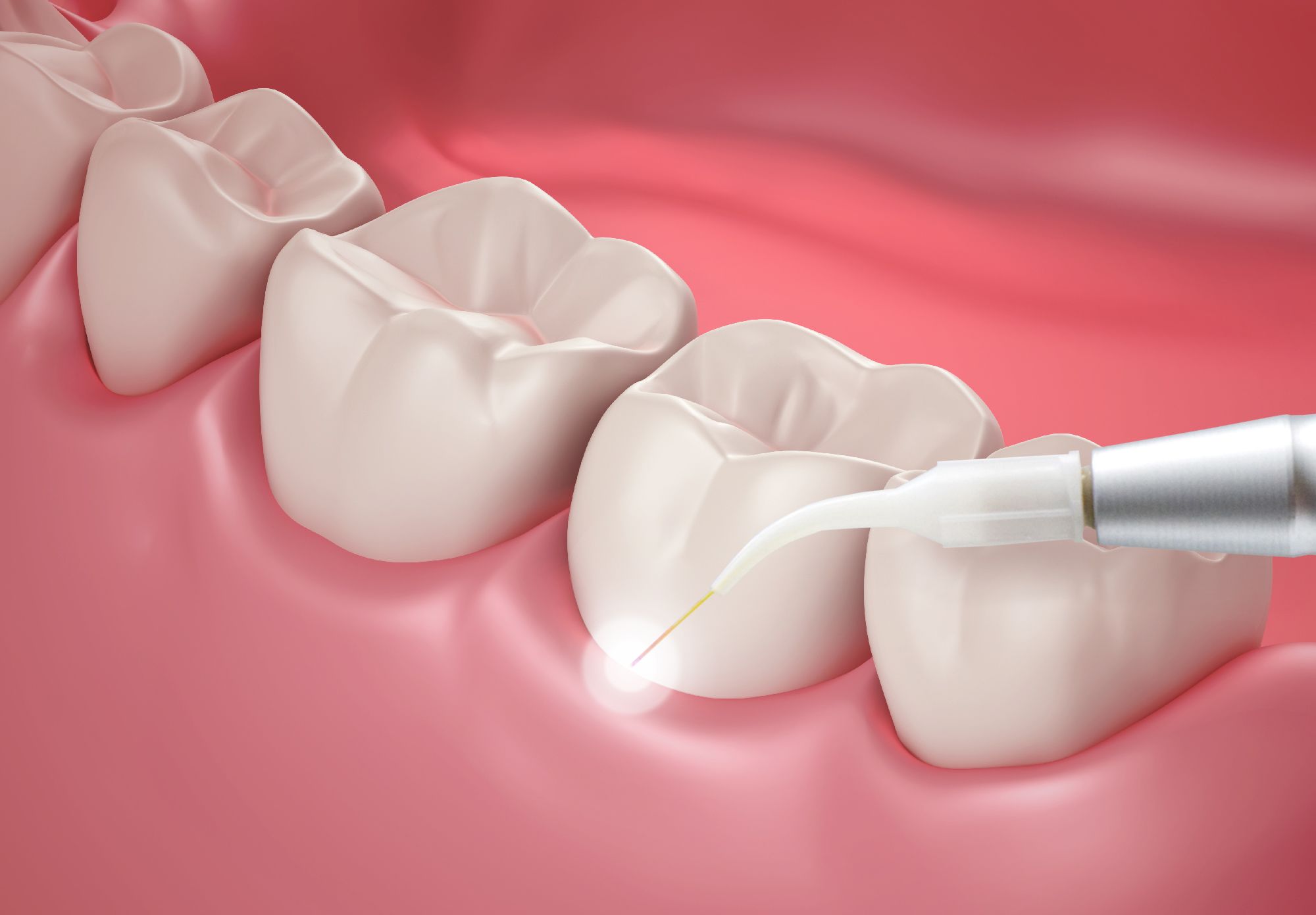
With CO2 lasers, electricity is run through a gas-filled tube containing a mixture of carbon dioxide, nitrogen, hydrogen and helium. The active medium (in this case CO2 gas) is pumped with an electrical current, producing light that is guided by articulated arms or hollow waveguides to their desired source. The laser then acts as a cutting instrument or a vaporizer of tissue that it comes in contact with.
CO2 lasers are continuous-wave lasers, meaning they produce a steady output of 0,600 nm infrared wavelength. This unique wavelength lets them accurately cut and efficiently coagulate tissue, making CO2 lasers ideal for delicate dental procedures such as cutting tissue, biopsies and more. Recently, a hard-tissue-capable CO2 laser has become available, allowing for efficient cutting of enamel, dentin and bone.
With their efficiency and safety, CO2 lasers help dentists perform a variety of procedures and treatments. CO2 lasers offer controlled thermal effects and sealing of nerve endings, allowing for a more comfortable and stable experience for the patient. When compared to traditional dental drills, CO2 lasers often cause less pain, reducing the need for anesthesia. They also minimize bleeding and swelling during soft-tissue treatments, leading to healthier teeth and gums. Additionally, CO2 lasers help reduce procedure length and can reduce or eliminate the need for sutures in many cases.